 Gooby
Gooby
Sudoku techniques, step by step
Every puzzle in our app can be solved by logic alone. These are the techniques you need, from your first Easy game to Master — each shown on a real position from one of our puzzles.

Words you'll see
- Unit — a row, a column or a 3×3 box. Each unit holds 1–9 once.
- Candidates (or notes, pencil marks) — the digits a cell could still be. In the diagrams they are the small numbers.
- Peers — cells that share a unit with a cell, so they can't hold the same digit.
- r4c7 — row 4, column 7. Boxes are numbered 1–9 left to right, top to bottom.
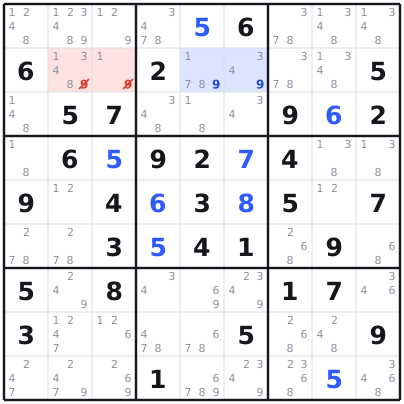
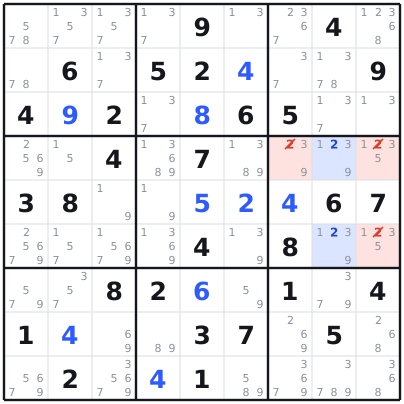
Most techniques don't place a digit directly. They remove candidates, and the removals then expose a single. In the diagrams, the pattern is shaded blue, removed candidates are red and struck through, and a placed digit is green.
Singles — the bread and butter
Hidden Single Easy
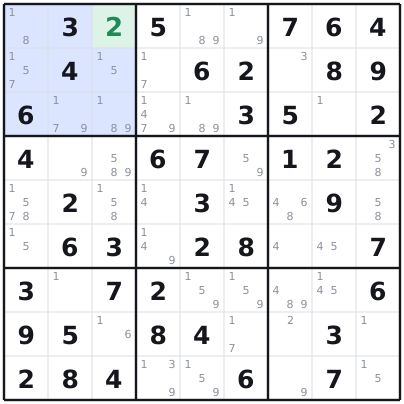
Pick a digit and a unit. If the digit fits in only one cell of that unit — every other cell is filled or already sees that digit — it must go there, even if the cell has other candidates. Scanning each box for each digit finds most of the moves in an easy puzzle.
Naked Single Easy
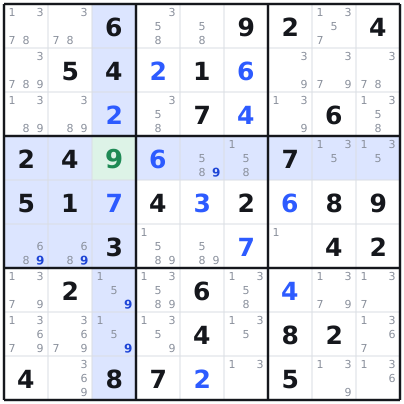
Look at one cell instead of one digit. If its row, column and box already contain eight different digits, only one candidate is left, so that's the answer. The shaded cells below are the peers that rule out the other eight digits.
Intersections — where boxes meet lines
Pointing Medium
If, inside a box, a digit's candidates all lie in one row (or one column), then that digit must be placed in that row within this box. So it can't appear anywhere else in the row — remove it from the rest of the row outside the box. Also called a pointing pair or locked candidates, type 1.
Box/Line Reduction Medium
The reverse of pointing. If, inside a row (or column), a digit's candidates all lie in one box, that box must use its copy of the digit on this line. Remove the digit from the other cells of the box. Also called claiming or locked candidates, type 2.
Subsets — pairs, triples and quads
Naked Pair Medium
Two cells in the same unit that have exactly the same two candidates, say {4, 6}. One of them will be 4 and the other 6 — we don't know which yet, but those two digits are used up. Remove 4 and 6 from every other cell of that unit.
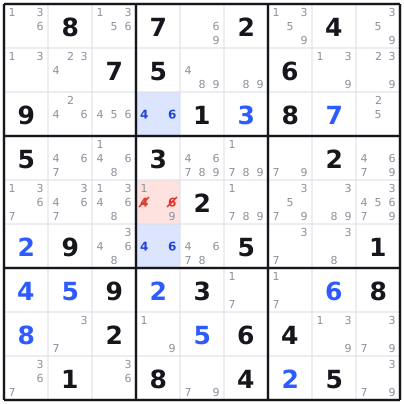
Hidden Pair Hard
Two digits that, within a unit, appear as candidates in only the same two cells. Those cells must hold those two digits, so every other candidate in the two cells can go. It's "hidden" because the cells still show extra candidates until you remove them.
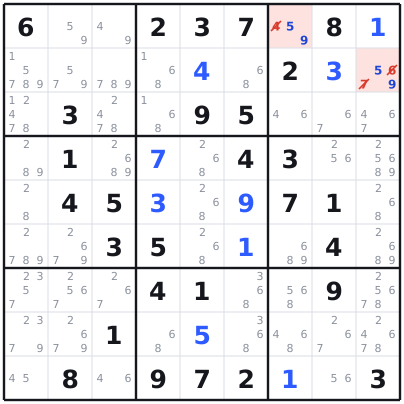
Naked Triple Hard
Three cells in a unit whose candidates, together, contain only three digits. Each cell doesn't need all three: {6, 7}, {7, 8} and {6, 8} is a naked triple too. The three digits are locked into those cells, so remove them from the rest of the unit.
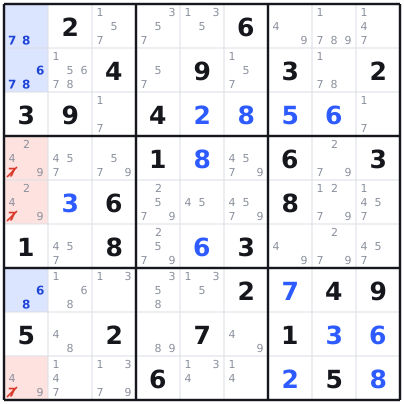
Hidden Triple Hard
Three digits that, within a unit, appear in only three cells. Those cells must hold exactly those digits, so clear every other candidate from them.
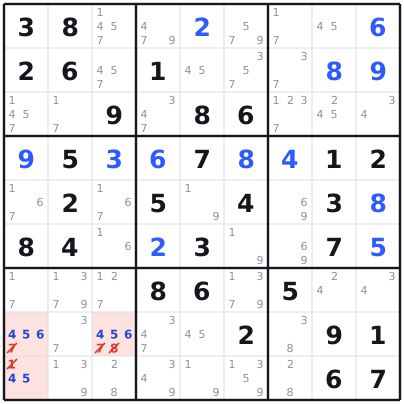
Naked & Hidden Quads Expert
The same idea with four: four cells limited to four digits (naked), or four digits limited to four cells (hidden). They're rare and hard to spot — a useful trick is that if a unit has a naked quad, the remaining empty cells of that unit often form a simpler hidden subset.
Fish — X-Wing and Swordfish
X-Wing Expert
Take one digit. If in two columns that digit can only go in the same two rows, the four cells form a rectangle. The digit must sit in two opposite corners — either way, both of those rows get their copy from these columns. Remove the digit from the rest of both rows. (It works the same with rows and columns swapped.)
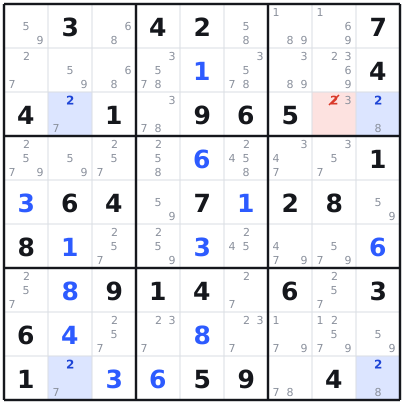
Swordfish Master
An X-Wing with three lines. If in three columns a digit's candidates all fall within the same three rows (each column may have only two of them), then those three rows are covered by these columns. Remove the digit from the other cells of those three rows.
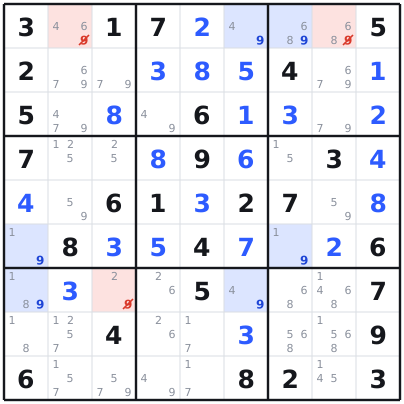
Wings — chains of two-candidate cells
XY-Wing Expert
Find a pivot cell with two candidates {X, Y}. It sees two wing cells: one with {X, Z} and one with {Y, Z}. If the pivot is X, the first wing is Z; if it's Y, the second wing is Z. Either way one wing is Z, so any cell that sees both wings can't be Z.
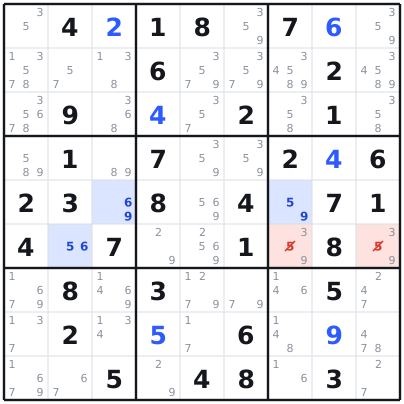
XYZ-Wing Master
Like an XY-Wing, but the pivot has three candidates {X, Y, Z} and the wings are {X, Z} and {Y, Z}. One of the three cells must be Z, so Z can be removed only from cells that see all three — the pivot and both wings — which usually means cells in the pivot's box.
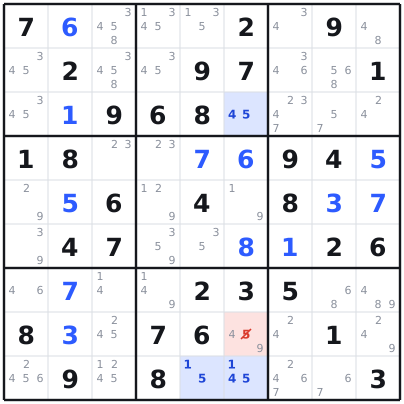
Practise with hints that teach
In the app, a hint highlights the cells and names the technique from this guide before it fills anything in. Free, offline and ad-free.